NYC
NONPROFIT
AGENCY
Web design, advocacy platforms, and digital marketing for nonprofits and campaigns across New York City.
Brooklyn-based. Built for missions. Available in person for NYC clients—and remote-first for everyone else.

100,000+
NYC NONPROFITS
The most of any city in the world
$10K/MO
GOOGLE AD GRANTS
Free ads for eligible nonprofits
100%
CUSTOM BUILT
No templates. Ever.
BROOKLYN
BASED & AVAILABLE
In-person for NYC clients
What We Do in New York
DIGITAL SERVICES FOR NYC NONPROFITS
From nonprofit web design NYC to Google Ad Grants management, advocacy platforms, and campaign sites—everything mission-driven organizations need to compete in the most competitive market in the world.
WHO WE SERVE IN NYC
New York's nonprofit sector is the largest and most diverse in the world. We know its landscape and we build for it.
ADVOCACY & POLICY
Tenant rights, tax policy, housing justice, criminal justice reform, and progressive advocacy campaigns across all five boroughs.
POLITICAL CAMPAIGNS
NYC Assembly, City Council, and statewide campaign websites. Fast turnaround, CMS-editable, fundraising-integrated.
ARTS & CULTURE
Museums, galleries, theater companies, and cultural institutions building audiences, selling tickets, and expanding donor bases online.
PUBLIC HEALTH
Health equity nonprofits, mental health organizations, and community health centers building trust and driving program participation.
COMMUNITY DEVELOPMENT
Neighborhood orgs, CDCs, immigrant services, and social services nonprofits serving communities from the Bronx to Staten Island.
EDUCATION & YOUTH
After-school programs, tutoring nonprofits, scholarship funds, and education advocacy organizations reaching students and families online.
LOCAL ROOTS, GLOBAL REACH
BROOKLYN BASED
We're embedded in the NYC creative ecosystem. Brooklyn authenticity, Manhattan-grade work, available in-person for kickoffs, strategy sessions, and workshops.
IN-PERSON AVAILABLE
NYC clients get the option of face-to-face collaboration. We find it especially valuable for complex advocacy projects, campaign launches, and site redesigns.
REMOTE-FIRST READY
Our entire workflow is built for remote-first collaboration. We serve nonprofits across the country and internationally—NYC is home, everywhere else is a Zoom away.
FAST TURNAROUND
Campaigns don't wait. Neither do we. We've launched fully custom WordPress campaign sites in under 3 weeks without cutting corners or sacrificing quality.
FULLY EDITABLE
Every site we build comes with a WordPress CMS your team can manage independently. No developer dependency. No bottlenecks. Your content, your control.
MISSION OBSESSED
We don't just build websites—we build platforms for movements. Every design decision, every line of code, every campaign strategy is in service of your mission.
New York Campaigns & Nonprofits
WORK WE'VE DONE HERE
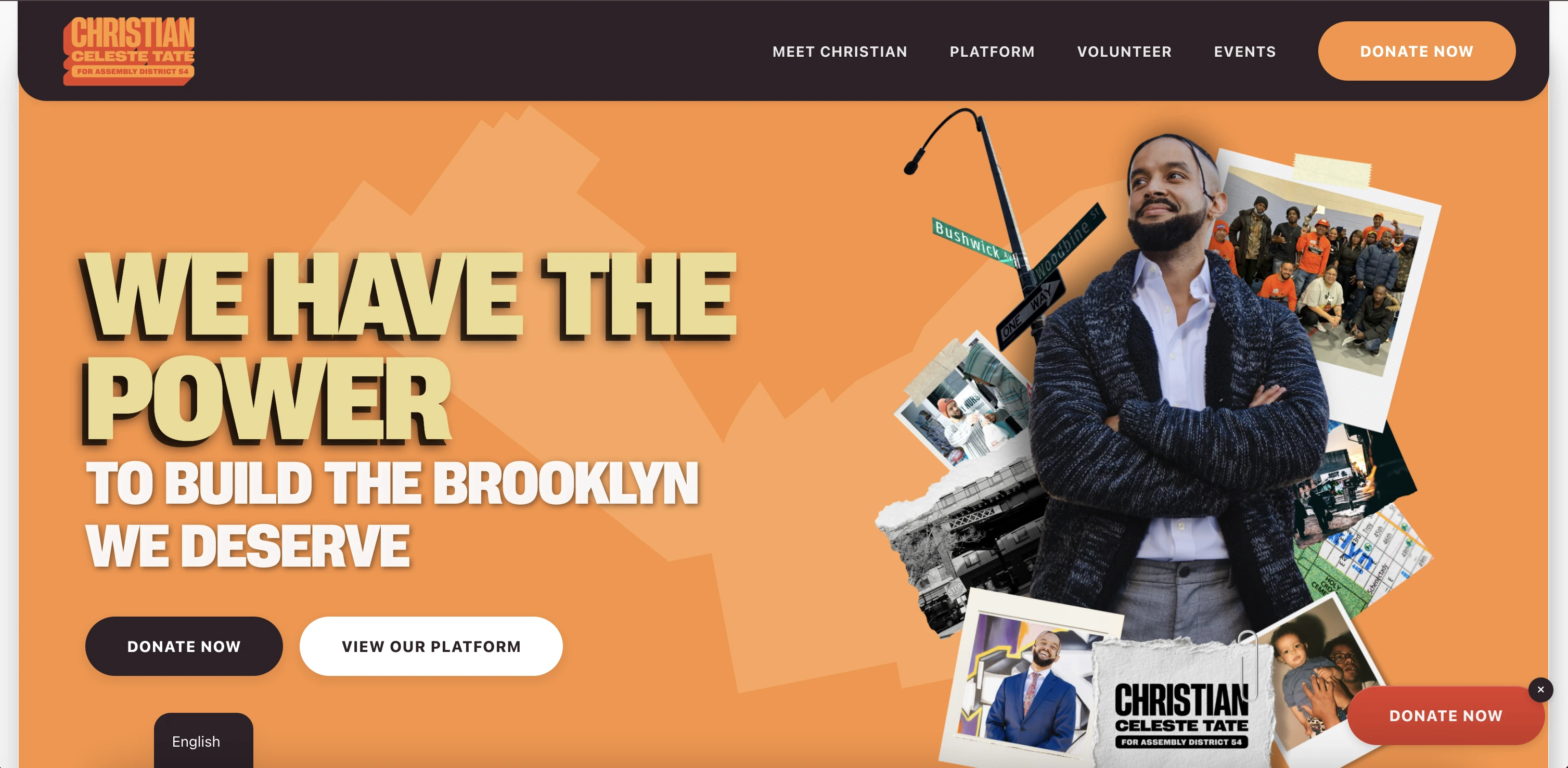
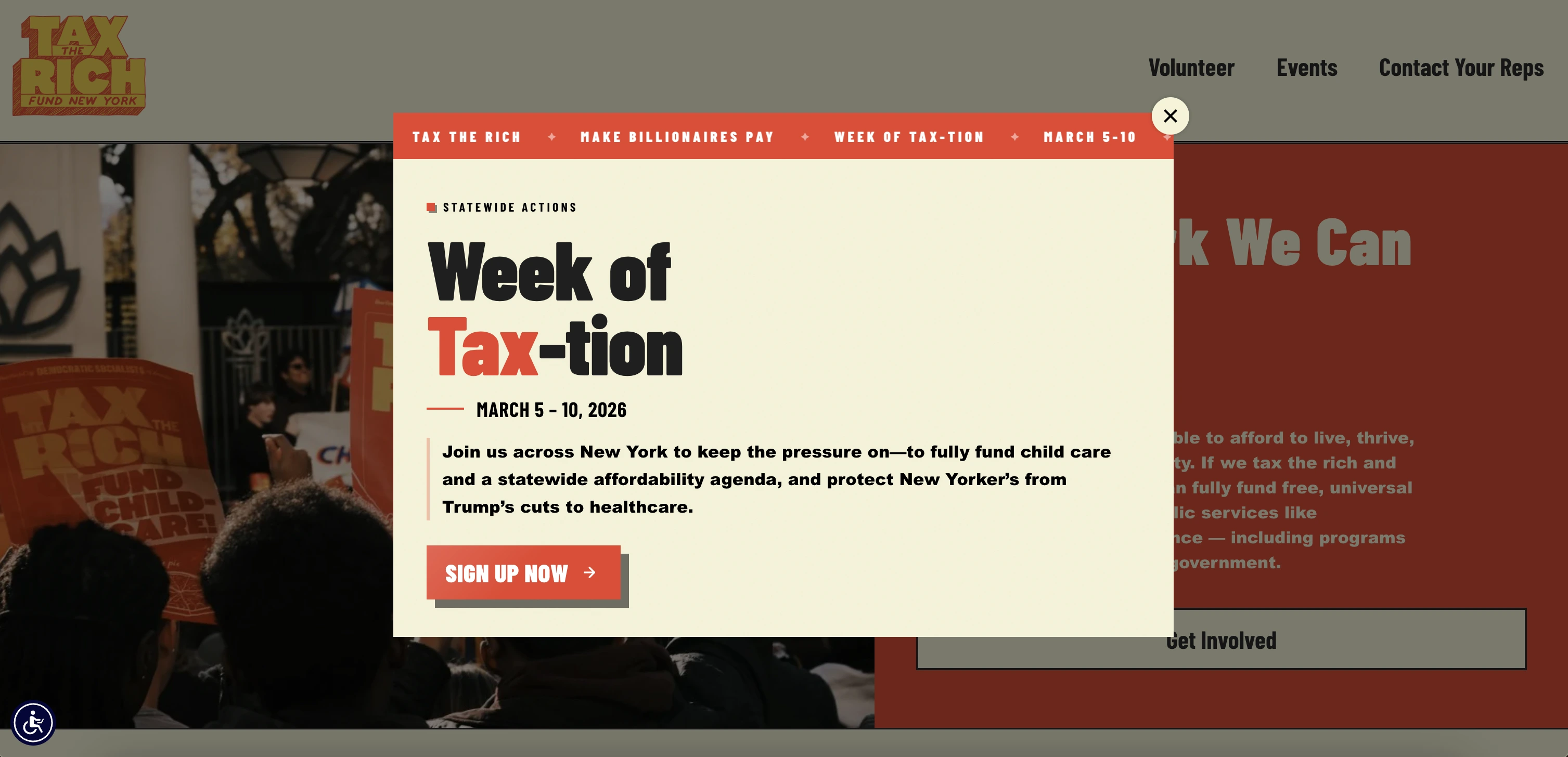
Real New York campaigns and organizations we've built for.
“Yeshaya is talented, reliable, and a pleasure to work with!!!”
ERICK STOLL
Campaign Director, Tax The Rich NY · New York City
★ VERIFIED GOOGLE REVIEW
Free Advertising for NYC Nonprofits
GOOGLE AD GRANTS: $10,000/MONTH FREE
Google gives eligible 501(c)(3) nonprofits $10,000 per month in free Google Search advertising. In a city with over 100,000 nonprofits competing for donor and volunteer attention, this is one of the most powerful—and most underutilized—tools available.
Most organizations either don't know they qualify, or fail to meet Google's compliance requirements and lose access. We handle everything: application, account setup, campaign strategy, keyword research, ad copywriting, and ongoing optimization.
$10K
PER MONTH
In free Google Search advertising
501c3
ELIGIBLE
Most registered nonprofits qualify
100%
MANAGED
We handle setup to optimization
NYC
COMPETITIVE
One of the most valuable channels for local nonprofits
FREQUENTLY ASKED QUESTIONS
Not at all. While we're based in Brooklyn and offer in-person collaboration for NYC clients, we work with nonprofit organizations, advocacy campaigns, and mission-driven businesses nationwide and internationally. New York clients simply get the added benefit of local market expertise and face-to-face strategy sessions.
Yes. For NYC-based clients we offer in-person project kickoffs, strategy workshops, and design reviews. We're based in Brooklyn with easy access to Manhattan, and we genuinely value face-to-face collaboration—especially for complex advocacy projects and campaign launches.
We work across the full spectrum of NYC's nonprofit and advocacy landscape: arts and cultural organizations, housing and tenant rights groups, political campaigns, public health nonprofits, social justice and racial equity organizations, immigrant services, community development nonprofits, and more. If your organization is mission-driven, we're built for you.
Yes. Google Ad Grants gives eligible nonprofits up to $10,000 per month in free Google Search advertising. We handle the full lifecycle: eligibility verification, account setup, campaign strategy, keyword research, ad copy, ongoing optimization, and compliance monitoring. For NYC nonprofits competing for donor attention in one of the most competitive markets in the world, Ad Grants is a critical channel we know well.
Absolutely. We've built custom campaign websites for New York political campaigns including cct4nyc.com (NY 54th Assembly District) and taxtherichny.com. We understand the unique requirements of campaign sites: fast turnaround, CMS access for campaign staff, fundraising integration (ActBlue, Solidarity Tech), bilingual capabilities, and event management. Campaign timelines are fast—so are we.
Project investment varies based on scope, complexity, and timeline. A focused nonprofit website typically starts in the $3,000–$8,000 range, while custom platforms with CMS, integrations, and multilingual support can range higher. We offer transparent, fixed-fee pricing—no hourly surprises. Book a free consultation and we'll scope your project honestly.
New York City has over 100,000 registered nonprofit organizations—more than any other city in the world. The competition for donor attention, volunteer engagement, and press coverage is intense. A weak digital presence doesn't just hurt your fundraising—it signals inactivity to supporters who are actively researching where to give and how to get involved. We help NYC nonprofits show up as the serious, credible, and urgent forces they actually are.
For standard nonprofit websites, our typical turnaround is 4–8 weeks from kickoff to launch. For campaign sites where speed is critical, we've launched fully custom WordPress platforms in as little as 2–3 weeks. We don't cut corners—we prioritize the right things first and build sustainably from there.
READY TO BUILD
SOMETHING
THAT MATTERS?
Whether you're a NYC nonprofit, an advocacy campaign, or a mission-driven organization anywhere in the world—let's build a platform that moves people to act.